Sunday, October 12, 2014

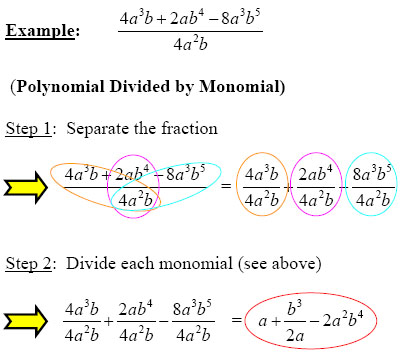
8th graders - dividing a polynomial by a monomial


All of you need to practice this skill.

Here is a Khan Academy video explaining the steps to simplifying this type of expression.

My advice is that when you see this type of problem written like (4x^2 - 5x + 10) ➗2x convert it into fractional form with a numerator and denominator:

4x^2 - 5x + 10
----------------
         2x


Saturday, October 11, 2014

What I am reading - Perceptual Learning


I am very interested in the psychology of learning. I was Googling around today to try to nail down the difference between associative learning and pattern recognition (there is a difference) and came upon this little gem (Kellman et al, 2010).

I have observed students learning through exposure to correct solutions without an explicit explanation but have not had a framework for understanding this process. From page 7:


Implicit pattern recognition versus explicit knowledge. Although PL may provide important scaffolding for explicit, verbalizable knowledge, PL itself need not involve explicit knowledge. PL changes the way a learner views a problem or representation; this idea of ‘‘mind as pattern recognizer’’ (Bereiter & Scardamalia, 1998) need not be accompanied by explicit facts, concepts, or procedures. In some domains, one might be able to demonstrate a ‘‘double dissociation’’ between PL effects and effects of con- ventional instruction. Whereas conventional instruction may lead to verbalizable knowledge but lagging pattern recognition and fluency, PL may produce the reverse. Such a clear division, although imaginable, may in practice be difficult to observe, because these forms of learning are normally synergistic, producing performance out- comes in which pattern recognition, facts, concepts, and procedures interact.  

There is much more to this. One very interesting insight is that students using PL methods will be able to "see" the solution prior to being able to verbalized the rationale for the solution method.

Learning is a very weird process and that makes teaching hard.


Kellman, Philip J., Christine M. Massey, and Ji Y. Son. "Perceptual learning modules in mathematics: Enhancing students’ pattern recognition, structure extraction, and fluency." Topics in Cognitive Science 2.2 (2010): 285-305.

Friday, October 10, 2014

4th grade study link pdfs have been added


Who is Mr. Nale is and why he is here?* I don't know but I do know that he has decided to post pdf version of all the 4th Grade Everyday Math Study Link assignments.

So if your 4th grader forgets his or her Study Link assignment for the day pay Mr. Nale a virtual visit and your problem is solved.

This post will migrate down the page soon so I have created a permanent page called 4th Grade Study Link PDFs on the right for your convenience.


*Kudos if you caught the Admiral Stockdale reference.


Thursday, October 9, 2014

Helpful Resources


This blog is to forgotten homework assignments as the hot iron and blowdryer are to leftover pizza.

There are a couple of resources on this blog that might help students and parents.

As a teacher and a parent I know that most students need to hear information 3 times before it sinks in.  When I assign homework I write the assignment on the board and read the assignment out loud.  I then ask students to tell me what the assignment is for the day.  In the case of the 4th and 5th graders I ask Rose to repeat the assignment to the group.  She also instructs them to write the assignment in their planners.

But I know that probably isn't enough for 100% of the students to remember various assignments.  So to add one more reminder/resource the Recent Homework Assignments page is updated (almost) daily.  Yesterday I could not update the page due to a connectivity issue.  The updated edits were eaten by an error message from blogger.

That said if you do have a question about homework assignments you can always go to that page and know what exactly students should be doing.

Another resource is the grade specific video pages.  If you or your student is not sure about a concept please look for a video on the topic.  Some videos are embedded on the page and others are linked within the text.

If you don't find a video that is directly on point please feel free to use Goggle or one of the links I provide in the Useful Links section of this blog on the right hand side.  Cool Math, Purple Math and Khan Academy have excellent instructional videos.


7th Graders - Watch this Lesson with Headphones on and Take Notes


Watch the video on evaluating expressions twice.  The first time mostly listen and pay attention.  You can make a few notes but the purpose of the first time is to absorb the main ideas.

The second time through take notes using the provided template.

When finished grab your Mad Lib answer sheets and go figure out the Mad Libs posted in the first floor hallway.

Friday, October 3, 2014

Fact: Talking Crabs Improve Math Fact Fluency


It's true.  Read on and find out why.

Math fact fluency is a key skill that all late elementary and middle school students must possess in order to succeed in mathematics. Siegler et al (2012) found that understanding of fractions and division at age 10 strongly predicted students' high school success in algebra at ages 15 - 17.

Let me repeat that finding - how well a 5th grader knows division and fractions predicts high school success in math 5 - 7 years later.  Getting those basic skills in place for all of our students is a crucial aspect of my job.


The picture above shows the current fact fluency of a relatively high achieving middle student here at Kazoo School from a report I generated using Reflex Math.  One of the reasons I like Reflex Math is access to detailed progress reports including usage and current levels of fluency.  I can see how much students are practicing and how they are progressing.

As you can see from the report above Reflex Math's initial assessment of middle school and late elementary students indicates a low level of math fact fluency.    Even our best students have a lot of room to grow!

Unfortunately this is a fairly typical situation in today's schools.  But don't worry. I have a plan to address this issue and it's a fun one.  

Hello Mon, Crabby here!

Perhaps you have noticed a new addition to homework assignment namely time allotted to Reflex Math.  Students love the games and feel of the program.  Crabby is the tour guide for tutorial and the creature students see when they log on.  I think he's pretty funny.  Who doesn't like a crab that has a Jamaican accent?  I encourage you to sit down with your child for a few moments just to see how the program works for yourself.

My sense is that this will be a very effective program for increasing fact fluency and that by the end of this year students will be much better at knowing their math facts.  I can't wait to see the results!

I am determined that all Kazoo School students leave knowing their fractions and are fluent with multiplication and division.  Making sure that all Kazoo School students are prepared to succeed in high school math is my goal.

It's fun and amusing to me that we have a friendly talking crab helping us meet one important aspect of that goal - math fact fluency.
Wednesday, October 1, 2014

What we studying in each class


4th grade:  Geometry


  • Angles, rays, lines, triangles and quadrilaterals 
  • Pipe cleaners and straws make awesome shapes
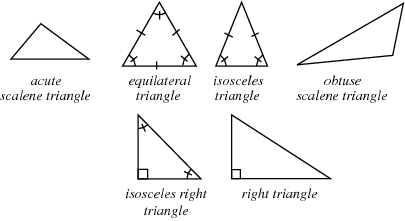
  • Equilateral, isosceles and scalene triangles
  • We started using Reflex Math to improve math fact fluency


5th grade:  Numbers and Operations


  • Arrays (think 15 poker chips arranged into a 3 x 5 grid, so 3 x 5 = 15)
  • Talked about columns and rows in a table (so this can be generalized beyond arrays)
  • Factors and fact families
  • 3 x 5 = 5 x 3?!  Who knew?!
  • We started using Reflex Math to improve math fact fluency


6th grade:  Integer Operations


  • After meditating do 4 - 5 quick problems of the day (POD)
  • This week's POD have showed me that we need to shore up multi-digit multiplication and division
  • As a result we mostly did multi-digit division using worksheets with visual cues
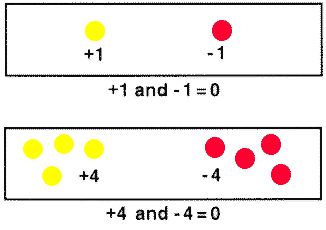
  • Continued building intuition using poker chips to model positive and negative number differences and sums
  • Introduced explicit rules to pair with intuitive exercises to build in 2 levels of understanding
  • Completed a puzzle with different integers sums and products were matched up to "fit" pieces together
  • We started using Reflex Math to improve math fact fluency


7th grade:  Order of Operations


  • Difficult and pedantic but necessary
  • We are labeling one side of the board P(parenthesis), E(exponents), MD (multiply and divide) and AD (addition and subtraction)
  • We cross off each letter from top to bottom as we complete all the operations of each kind before proceeding to the next
  • Order of Operations Scavenger Hunt!
  • Took Quiz 1
8th grade:  Adding, Subtracting, Multiplying and Dividing Polynomials


  • We played Red Fish, Blue Fish, Yellow Fish, Blue Fish Polynomials!
  • Reviewed and further practiced polynomial addition and subtraction
  • Practiced using the box method for polynomial multiplication
  • Took Quiz 1!